
Recommendations for Attendees
Su título va aquí
Travel Requirements for Chile
The minimum documents required to enter Chile are:
- A valid passport (must be valid for at least 6 months from the date of entry and have two blank pages).
- Sufficient funds to cover the trip.
- Return flight ticket.
- Visa (if applicable).
Depending on your nationality, you may need a visa to travel to Chile. It is the responsibility of workshop participants to complete the necessary procedures.
To view the list of countries whose citizens are subject to this requirement, please visit the Ministry of Foreign Affairs’ Consular Services website.
We also recommend considering the purchase of medical and/or accident insurance.
Transportation
If you are using public transport, we recommend that you take the Santiago Metro.
To use the Metro or bus, you need to purchase a BIP card, which is sold at all Metro stations and costs CLP$1,550 (approx. USD$1.65). This card must be topped up with credit before it can be used. Metro fares range from CLP$710 to $870 (approx. USD$0.8 to 0.9), depending on the time of day.
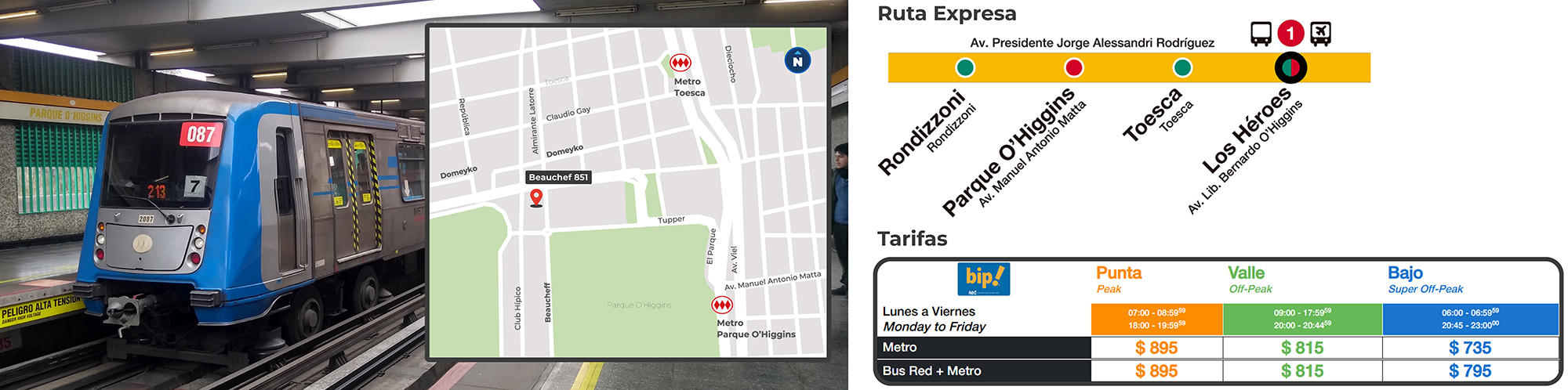
To get to the Faculty of Physical and Mathematical Sciences by Metro, the nearest stations are:
- Toesca (Line 2, a 12-minute walk away).
- O’Higgins Park (Line 2, a 13-minute walk away).
- Los Héroes (Line 1, a 20-minute walk away).
From Monday to Friday, from 6 am to 9 am and from 6 pm to 9 pm, Metro Line 2 operates an Express Service, which means that trains only stop at certain stations, depending on the colour of their route (red or green); you therefore need to check which route the train you are taking follows. In this case, Parque O’Higgins station is on the red route and Toesca station is on the green route. Meanwhile, Los Héroes station is a common station, meaning that both red-lit and green-lit trains stop there.
Private Transportation
In Santiago, Uber and Cabify are also available as private transport options. Visitors are encouraged to use these services rather than taxis, as they offer greater fare transparency and may help avoid unexpected charges.
Safe Transport to and from the Airport
Upon arrival at the airport, we recommend arranging official transport before leaving the customs area or the passenger arrivals area. If possible, this can also be booked before arriving in Santiago, Chile. Official transport options may include authorised transfer services or official taxis.
Further information is available on the Arturo Merino Benítez Airport (SCL) website.
For your return flight, we also recommend travelling to the airport using official transport.
Suggested Accommodation
For your stay, we recommend the following hotels in the districts of Providencia and Santiago, located close to metro stations and other transport links.
Although these areas are considered safe, we would ask you to take the usual precautions that apply in any capital city. In the surrounding area, you will also find a wide variety of places to eat, stock up on supplies, go shopping and enjoy leisure activities.
Alternatively, it is also safe to stay in Airbnb accommodation in Chile. This platform often offers more affordable options and, in some cases, accommodation located even closer to the venue. It is advisable to take the necessary precautions, such as checking reviews from other guests and verifying the host’s reputation before booking.
Below is a list of safe hotels for your stay:
Providencia:
– Hotel Mr. Hotel: Av. Pedro de Valdivia 164, Providencia
https://www.mrhoteles.cl/hoteles/mrhotel/
– Hotel Novotel Providencia: Av. Holanda 222, Providencia
https://all.accor.com/hotel/A092/index.en.shtml
– Hotel Solace: Monseñor Nuncio Sótero Sanz de Villalba St. 115, Providencia
https://solacehotel.cl/santiago/
Central Santiago:
– Hotel Cumbres Lastarria: José Victorino Lastarria St. 299, Santiago
https://www.cumbreslastarria.com/
– Casa Conde Boutique Hotel (near the event venue) Concha y Toro 13, Santiago
Electricity
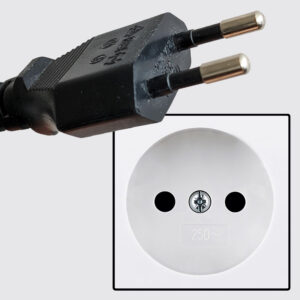
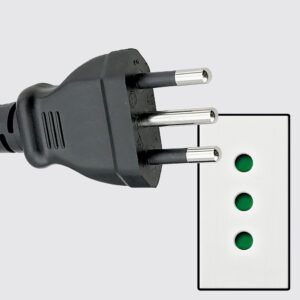
In Chile, the standard voltage is 220V, and the commonly used plug types are Type C and Type L, both with round pins:
Type C:
Type L:
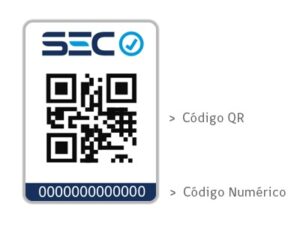
If you decide to buy an adapter, we recommend choosing one certified by the Superintendency of Electricity and Fuels (SEC). This certification ensures that the product complies with current Chilean regulations and does not pose safety risks. You can identify it by the mark shown below:
If you would like to find out more about the certification, click here, and for further information on electrical standards, click here.
Climate and clothing
Santiago is characterised by its Mediterranean climate and, during October, maximum temperatures range from 22°C to 29°C on average.
We recommend checking the weather forecast on AccuWeather before your trip, bringing a jacket and suitable clothing, and wearing sun cream at all times.
Money and ATMs
The official currency of Chile is the Chilean peso. At the time of writing this guide, the exchange rate against the US dollar is 1 USD = 943.40 CLP.
Banks in Chile are open from 9 am to 2 pm, whilst ATMs operate 24 hours a day.
For currency exchange, we recommend using only official exchange offices located at the airport, in shopping centres, or in formal establishments within the city. Please avoid any offer that requires entering a residential or office building, as legitimate currency exchange offices do not operate in such locations and these offers are generally scams.
As a suggestion, there are currency exchange bureaux at the following locations in the city:
- Santiago Centro: Agustinas St. between Bandera St. and Paseo Ahumada St.
- Providencia: Providencia Av at the intersection with Pedro de Valdivia Av.
Safety in the city
Santiago is a vibrant and welcoming city, offering rich cultural experiences and a wide range of entertainment options. However, visitors are advised to take certain precautions.
- Look after your belongings: keep your personal belongings, such as mobile phones, wallets and handbags, within sight at all times. Take care not to leave valuables in plain sight.
- Precautions when using public transport: although public transport in Santiago is efficient, please bear in mind that stations and buses can be very crowded at certain times of the day. It is advisable to avoid displaying valuables and to keep an eye on your belongings at all times.
- Safety on public roads: in unfamiliar or less busy areas, it is best not to walk alone at night. Ask local people or hotel staff about areas of the city that may be less safe. Use reliable transport services such as registered taxis, private transport or the public transport system.
- Be careful with personal information: avoid sharing personal information or details of your travel plans with strangers. Keep a low profile and avoid discussing sensitive topics in public.
Enjoy the city during your stay
Enjoy the local cuisine: Santiago offers a wide range of dining options. Don’t miss the chance to try traditional Chilean food, such as empanadas, pastel de choclo and fresh fish and seafood. The city also boasts a wide variety of international cuisine, as well as vegetarian and vegan options.
- Tips: In any bar or restaurant, the suggested tip when asking for the bill is 10% of the total bill.
- Explore the tourist attractions: We recommend exploring the city’s iconic landmarks, such as Cerro San Cristóbal, the Bellavista and Lastarria neighbourhoods, Sky Costanera, the National Museum of Fine Arts (MNBA), the Museum of Contemporary Art (MAC) and the Museum of Memory and Human Rights (MMDH).
- Connectivity and Communication: make sure you have a reliable way of communicating during your stay. Most tourist attractions and hotels offer Wi-Fi access, and it is useful to have a data plan or a local or international SIM card for emergencies.